
 Cone
ConeDead rock, and a hole where the summit should be.
Life Sandbox Sim
Plant a seed and it grows without you.
A whole biome in your pocket: terrain, weather and seasons, plants that spread, and animals that feed, breed, hunt and die. Close the app and it keeps going.

No ads · No subscriptions · Works offline
Tile 001
The land is not stored anywhere. It is computed. Every stretch of ground is a function of the seed and the place, so the same nine characters grow the same coastline for anybody who types them — on your phone, on a stranger's, a year from now.
That is what makes a world shareable without a server. A biome travels as nine characters, and those nine characters also fit in a QR code: point the camera at somebody's screen and you are standing in their biome. Nothing is uploaded and nothing is recorded — the code is the whole message.
Type words or type a code. Words are hashed exactly the way the app hashes them, so the nine characters you get back are the ones Vivarium answers to. This page grows its own small view of the field.
Tile 013
One biome day is 2.4 minutes of yours. Twelve days make a season and four seasons make a year, so a whole year here passes in under two hours.
None of it waits for you. Close the app and the world runs on; open it again and Vivarium simulates the hours you were away before handing the biome back. You return to weather that moved, plants that spread, and animals that are somewhere else now.
And however long you leave it, there are three ways to look at what you come back to: the flat map, straight down; the plate leaning, where the world is standing blocks with their tops lit and their sides in shade; and the relief glass over that, which exaggerates the slopes so ground that reads as flat shows the hills and hollows it really has.
One seed, drawn three ways. The relief glass changes nothing about the land — only how tall it looks.
Tile 034
Animals graze, breed, hunt each other and starve. Plants take hold in ground that will hold them and die back where it won't.
None of it is scripted. A population crash is simply what the numbers did that week, and so is a good spring. New species arrive as the biome grows, and the chronicle writes down what happened while you watch — or while you don't. Shake the phone and the whole thing feels it.
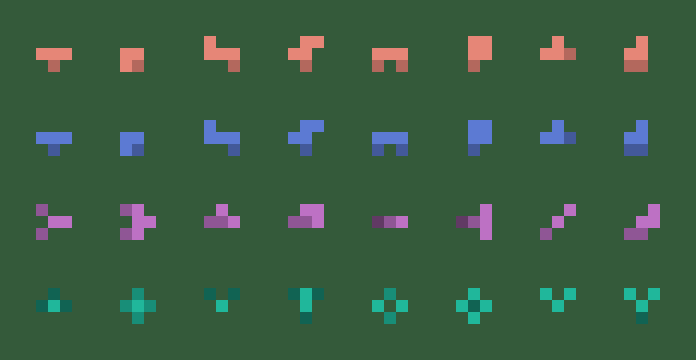
Colour is a species' identity and nothing else's — no two animals in a world are ever drawn the same.
Tile 128
Geysers, tar pits, standing dunes, a wrecked ship, a ring of stones somebody left. They are not placed for you. They are what the ground did, and you either walk into them or you never know they were there.
ConeDead rock, and a hole where the summit should be.
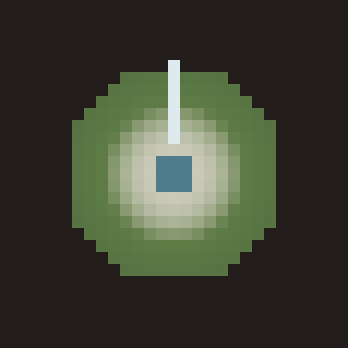 Geyser
Mineral crust, and the brightest thing the land does.
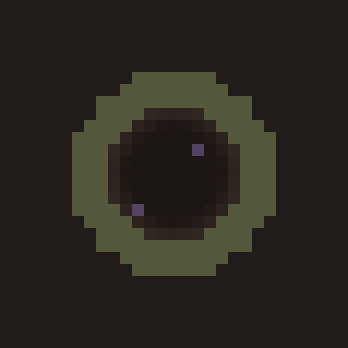 Tar pit
The darkest ground here. It has a sheen when the light moves.
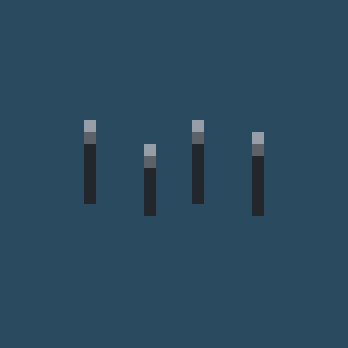 Sea stacks
Dark rock standing in open water.
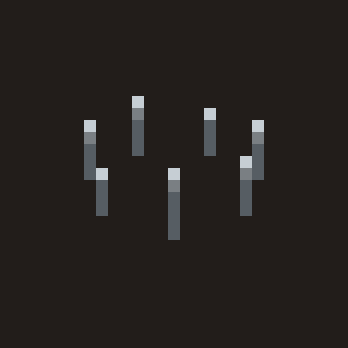 Stone circle
Cold stone, and earth somebody walked flat.
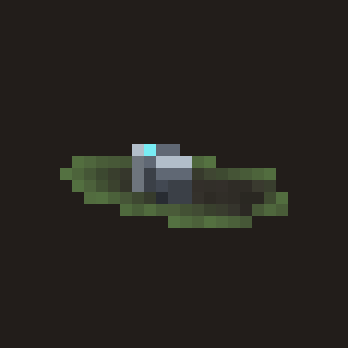 Crashed craft
The only clean curve on the map, and a burnt furrow behind it.
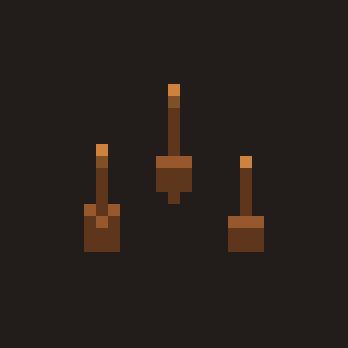 Termite towers
Baked earth. The only saturated ochre in the world.
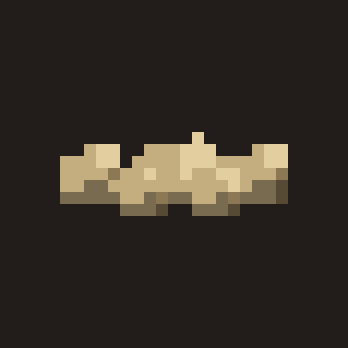 Standing sand
A lit back, a cut face, and a crest between them.
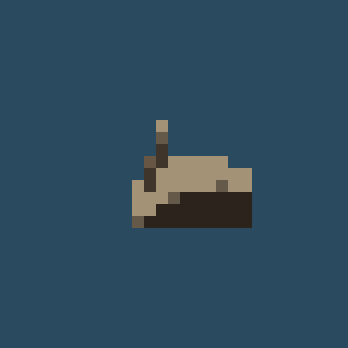 Wreck
WreckTimber that has been in the sea a long time.
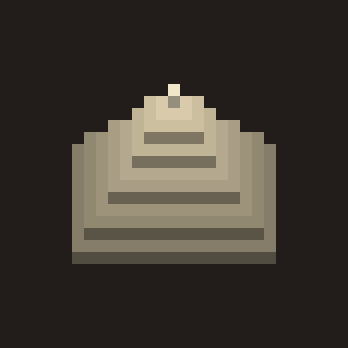 Pyramid
Cut stone, pale cream at the apex.
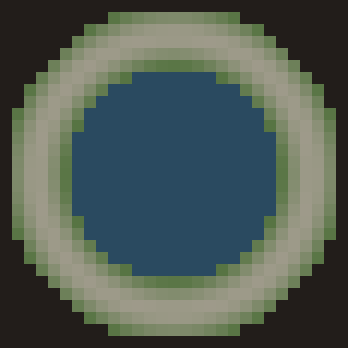 Crater
A ring of thrown rock. Sometimes it fills.
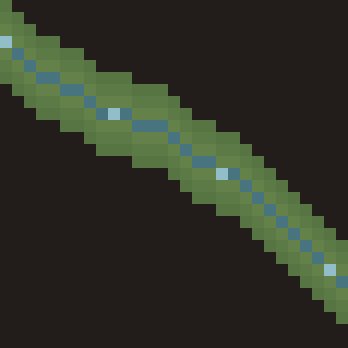 Stream
Fresh water crossing ground that is above the sea.
Tile 256
The biome sheds material as it lives — fibre, spore, bone and stone. You pick it up by hand, or leave a collecting arm to do it for you, and you spend it on structures. Every one of them is a lever on the ecosystem, and the interesting ones cut both ways.
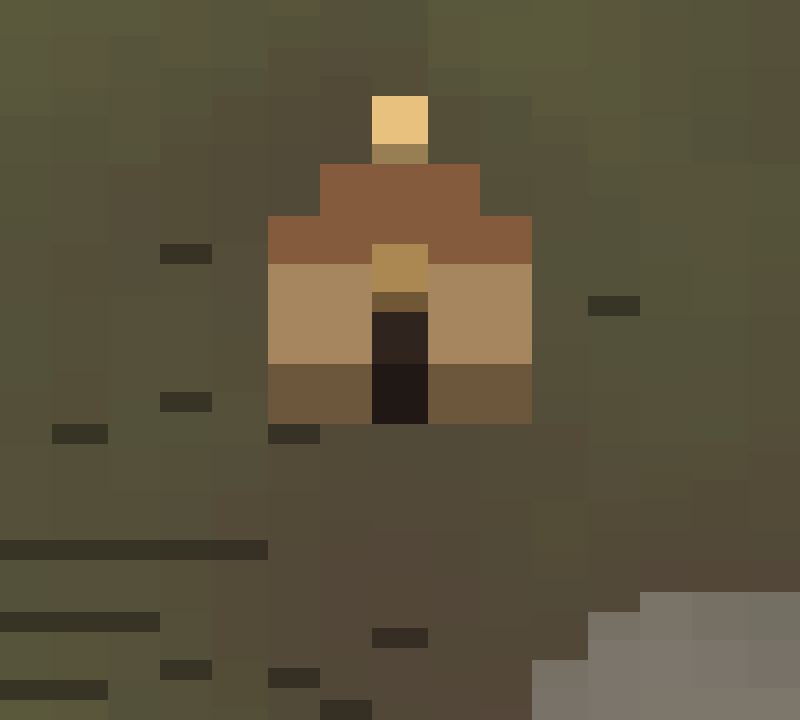 ShelterFibre 8 · Stone 6Eases cold stress nearby; creatures shelter here through frost.
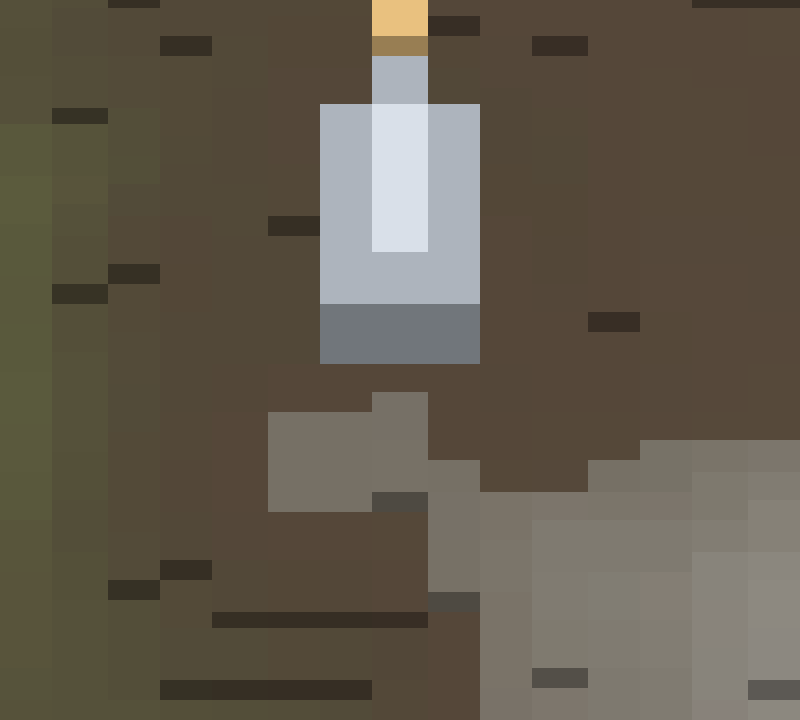 ObeliskStone 22 · Fibre 20 · Spore 18 · Bone 23A frontier monolith — completing it unlocks the next tile.
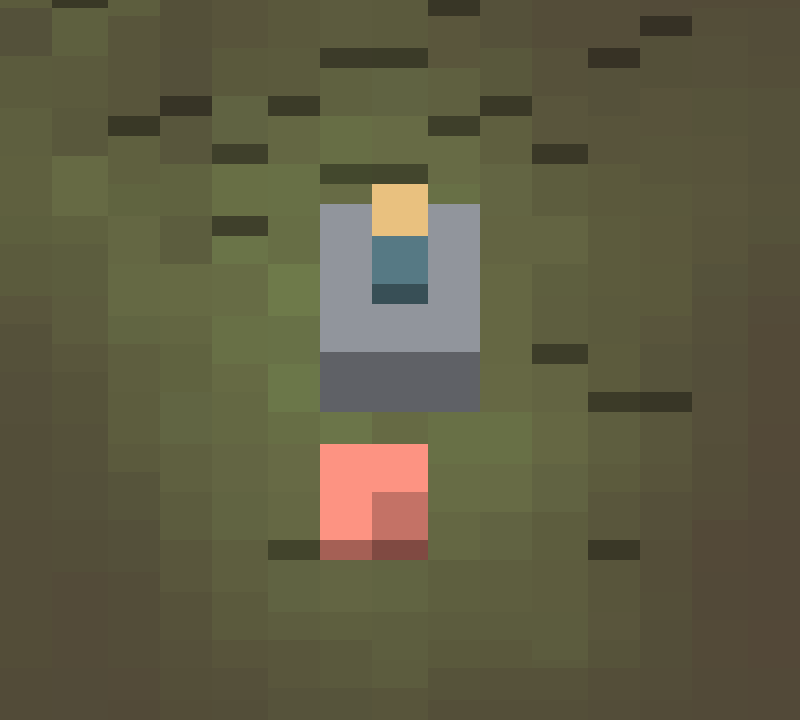 SpringStone 6 · Spore 6An oasis — raises moisture, thickening the green around it.
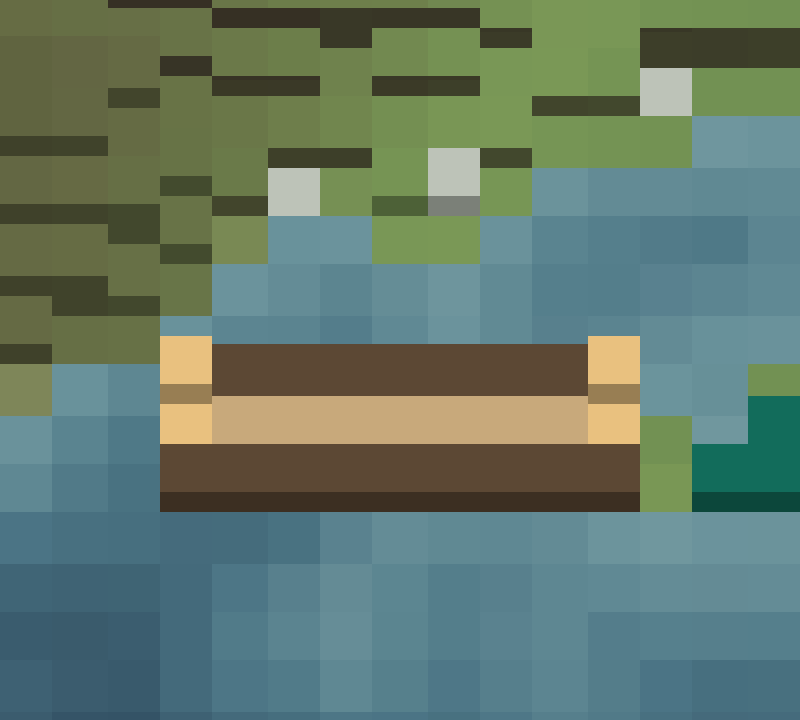 CrossingFibre 12 · Stone 10A deck over the water. What could not follow the herd across now can.
 BeaconStone 14 · Fibre 12 · Spore 10 · Bone 8A lamp that never goes out. The green grows through the night — and nothing rests.
 BoardFibre 4 · Bone 2A plank on two posts. Three lines, and they travel with the world.
Two of the twenty-six are for saying something rather than doing something. A board is a plank on two posts carrying three lines of sixteen characters. A place mark is a white flag with a name on it, and the console keeps a list of them so you can go straight back.
And all of it travels. A biome is handed over as nine characters — read down a phone line, written on paper, or scanned straight off somebody's screen — and the code carries your boards and your names with it. No server, no feed, no accounts: it goes from one person to another, and it works with the network off.
Tile 999
A world starts twenty tiles wide. Raise an obelisk at the frontier and the land goes out further — as far as tile 999.
An obelisk is the most expensive thing you can build, and it is meant to be: it wants all four materials at once — twenty-two stone, twenty fibre, eighteen spore, twenty-three bone. Opening the next tile is the one decision Vivarium treats as large, so the frontier stays a thing that has to be earned.
In brass: the twenty tiles every world starts with.
The instrument
Vivarium has no advertising, no subscriptions, no analytics and no account. It never asks who you are, because nothing in it needs to know. The whole simulation runs on your phone, and it runs with the network off.
Plant one and leave it alone for a while.